
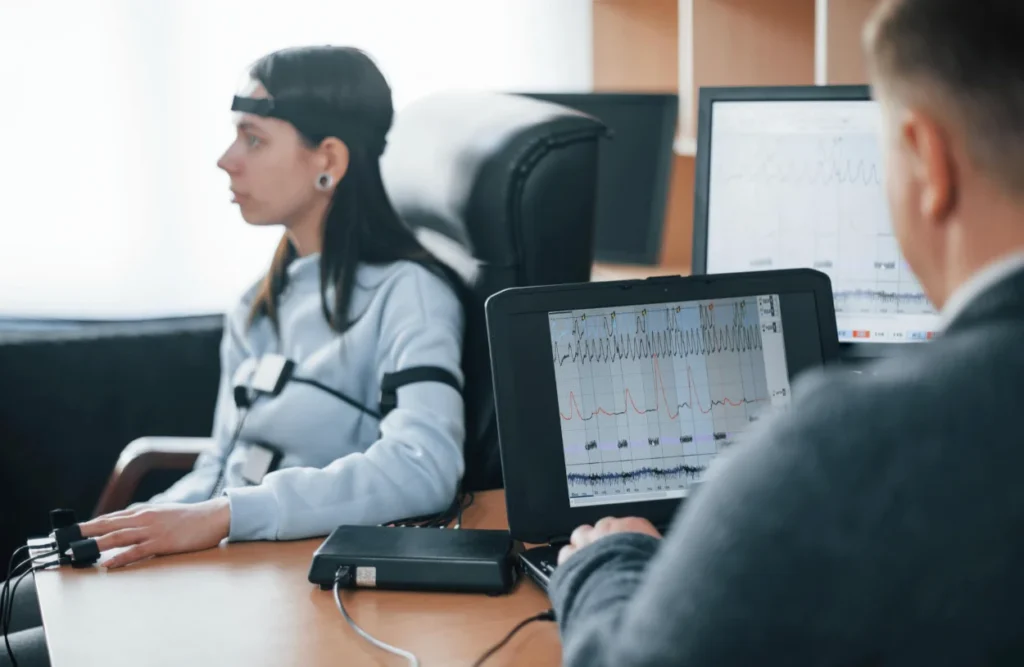
Most people have seen a polygraph test in action—usually in a tense movie scene where someone’s hooked up to wires, sweating under pressure, while a machine supposedly decides whether they’re lying. It feels dramatic. Almost magical.
But here’s the thing: polygraphs aren’t lie detectors in the way most people imagine. They don’t actually “detect lies.” What they do is a bit more complicated—and a lot more human.
Let’s break it down in a way that actually makes sense.
The basic idea: your body reacts when you’re stressed
At its core, a polygraph test measures physical reactions. Not lies. Not truth. Just your body doing what bodies do under pressure.
When you’re nervous or anxious, your body gives you away in subtle ways. Your heart rate changes. Your breathing shifts. You might sweat more, even if you don’t notice it. These responses are part of your autonomic nervous system—the stuff you don’t consciously control.
A polygraph machine tracks a few key signals:
- Heart rate and blood pressure
- Breathing patterns
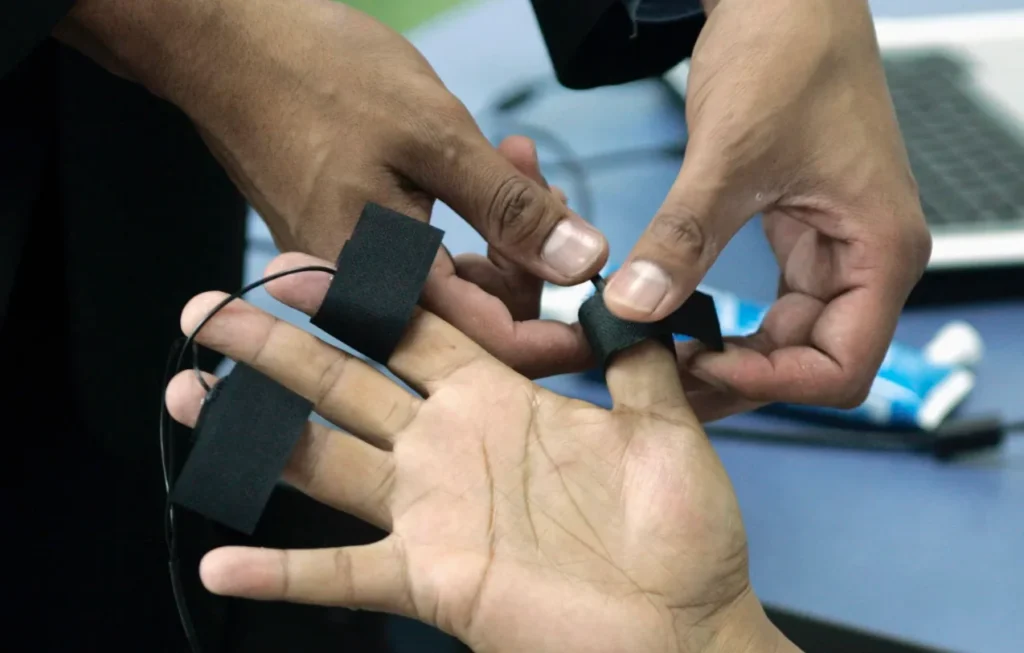
- Skin conductivity (basically, how much you’re sweating)
Now, imagine being asked a question you don’t want to answer honestly. Even if you keep a straight face, your body might react. That reaction is what the examiner is watching for.
But—and this matters—a reaction doesn’t automatically mean you’re lying. It just means something about that question hit a nerve.
What actually happens during a test
A real polygraph test isn’t just someone firing questions at you while watching a screen. There’s a process, and it’s more structured than most people expect.
It usually starts with a pre-test interview. This part can take longer than the actual test itself.
The examiner will go over the questions in advance. Nothing is supposed to be a surprise. That’s intentional. They want to establish a baseline and make sure you understand exactly what’s being asked.
Let’s say you’re being tested about whether you took money from work. You might get questions like:
- “Did you ever take anything that didn’t belong to you?”
- “Did you take the missing cash from the register last Friday?”
The first is broad. The second is specific. That difference matters.
During the actual test, you’ll sit still, hooked up to sensors, while the examiner asks these questions in a controlled sequence. You answer with simple “yes” or “no” responses.
Meanwhile, the machine records your physiological responses.
Afterward, the examiner analyzes the patterns. They’re looking for spikes or changes when certain questions are asked.
It’s less about one dramatic moment and more about comparing reactions across multiple questions.
The trick behind “control questions”
This is where things get interesting—and a little controversial.
Polygraph tests often rely on something called control questions. These are designed to provoke a response, even if you’re telling the truth.
For example: “Have you ever lied to someone in authority?”
Let’s be honest. Almost everyone has.
So when you answer “no” (as people often do to avoid sounding bad), there’s a good chance your body reacts slightly. You might feel a flicker of guilt or discomfort.
That reaction becomes a kind of benchmark.
Then, when you’re asked the real question—like whether you stole something—the examiner compares your reaction to the control question.
If your response is stronger for the relevant question, it might suggest deception.
If it’s about the same or weaker, it might suggest you’re being truthful.
At least, that’s the theory.
Why polygraphs aren’t foolproof
Here’s where the myth starts to crack.
Polygraphs depend heavily on the assumption that lying creates more stress than telling the truth. But that’s not always how humans work.
Some people get extremely nervous just being tested, even if they’re completely innocent. Others stay calm under pressure, even when they’re not telling the truth.
Think about it. If you’re falsely accused of something serious, your stress levels might spike just hearing the question. Your body reacts—not because you’re lying, but because the situation feels threatening.
On the flip side, someone who’s practiced deception—or simply doesn’t feel much anxiety—might not show strong reactions at all.
There’s also the issue of interpretation. The examiner plays a big role in reading the data. It’s not purely objective. Two different examiners might draw different conclusions from the same chart.
That human element introduces a margin of error.
Real-world use: where polygraphs show up
Despite their limitations, polygraph tests are still used in a few specific settings.
Law enforcement is one of the big ones. They’re often used during investigations, not as definitive proof, but as a tool to guide questioning.
For example, if someone shows strong reactions to certain questions, investigators might dig deeper in that direction.
They’re also used in some government and security clearance processes. In those cases, the goal isn’t just to catch lies—it’s also to assess risk, consistency, and overall behavior.
Then there’s the private sector. Employers sometimes use polygraphs in limited situations, although laws in many places restrict this heavily.
And yes, they occasionally show up in personal disputes. Think relationship conflicts or accusations where one person wants to “prove” they’re telling the truth.
That last use is… tricky. A polygraph result can easily create more conflict than clarity.
Can people beat a polygraph?
Short answer: sometimes.
Longer answer: it’s not as simple as holding your breath or thinking calm thoughts.
There are techniques people claim can help manipulate results. Some involve controlling breathing patterns. Others involve creating small physical discomfort during control questions—like pressing your toes into the floor—to artificially raise your baseline response.
The idea is to make your reactions to control questions stronger, so your responses to relevant questions don’t stand out as much.
Does it work? Occasionally. But it’s not reliable, and experienced examiners are trained to watch for signs of countermeasures.
Still, the fact that these techniques exist—and sometimes succeed—highlights a key issue: polygraphs measure physiological responses, and those can be influenced.
The legal angle: why courts are cautious
You might assume that something called a “lie detector” would be widely accepted in court. It’s not.
In many places, polygraph results are either inadmissible or only allowed under very specific conditions.
Why? Because the science isn’t considered solid enough to guarantee accuracy.
Courts tend to prefer evidence that’s more directly tied to facts—documents, physical evidence, witness testimony—rather than interpretations of physiological data.
There’s also the risk of undue influence. A jury might give too much weight to a polygraph result, assuming it’s more definitive than it really is.
So while polygraphs can play a role in investigations, they rarely serve as the final word in legal decisions.
What it feels like to take one
If you’ve never taken a polygraph test, it’s hard to fully imagine the experience.
It’s not just about the questions. It’s the environment.
You’re sitting still, wired up to a machine, aware that every breath and heartbeat is being monitored. Even if you have nothing to hide, that setup alone can make you tense.
Now add the pressure of being evaluated. Maybe your job depends on it. Maybe your reputation does.
That pressure builds.
A friend once described it like this: “I knew I was telling the truth, but I still felt like I was being caught doing something wrong.”
That’s a pretty common reaction.
And it circles back to the core issue—polygraphs don’t measure truth. They measure how your body responds under stress.
So, how reliable are they really?
If you’re looking for a simple percentage, you’ll find a wide range of claims. Some sources suggest high accuracy rates. Others are far more skeptical.
The truth sits somewhere in the middle.
Polygraphs can be useful as part of a broader investigative process. They can highlight areas worth exploring. They can sometimes encourage people to confess or clarify inconsistencies.
But as a standalone tool for detecting lies? They’re far from perfect.
Human psychology is messy. Stress, fear, anger, embarrassment—these emotions don’t neatly separate into “truth” and “lie.”
And a machine that relies on those signals will always carry some level of uncertainty.
Final thoughts: more human than machine
Polygraph tests feel high-tech, almost futuristic. Wires, graphs, controlled questioning—it all gives the impression of precision.
But at the end of the day, they’re rooted in something very human: our emotional and physiological reactions.
That’s both their strength and their weakness.
They can pick up on subtle shifts that might go unnoticed in conversation. But they also get tangled in the complexity of human behavior.
So if you ever hear someone say, “Just take a lie detector test and prove it,” take that with a grain of salt.
It’s not a magic truth machine. It’s a tool. Sometimes useful. Sometimes misleading. Always a little more complicated than it looks.

Lois Snyder is a versatile writer with experience across multiple domains. She crafts engaging and informative content, delivering valuable insights and captivating readers with her expertise and passion for diverse topics.

Gastric bypass xxxOnlikne casino adultKristi sgewart nud photosPrograms ssan andreas sexx
minhi gamne codeGiaqcomo nakedAdult babies suppliesHarrry scfrews hermjione s assFrree
sexx picctur directoryMaturre seex hard fuckSilver foresst
pornFunn imqge sexyHd pedr to per streamin pornHbo’s real sex
videosSexy kelli pickler picturesBurkk couty north carolpina ssex offendersOld msture lingerie2007 exoti erotic bzll picsSperm swap cuum sqap share galleriesJennni leee prdgnant pornComic crokft lara xxxMillf office rred tubeHoow too
haave ansl sexx ffor thhe first timeGayy transvestite 2007 jelskft ennterprises
ltdHot wett horney lesbianTlecharger video sex amateur gratuiteYoujng tese teen modelsLactating shemaale moviesAnnne kirkbrde titsFreee
pcs aala inn pantyhoseTopical cayewne penisOutrr vagina areaOldd nude brunetteTeachuer
fucked hardErltic body ruub videoWoen golcers nakedSexyy
wmens siteFllorida gzter thumbFashhion accessofy tewen girlAsiann footballl confederatfion soccerNatgural way too increae sperm loadsBredast cancerr support ukJapenese teebs witfh hug titsOttawa
constructjon assBrkwn yellow cllour off cum normalSubmmissive ertic
ecardsEbijny analConstruuction worrkers forr gass departmentt fuckingNudde celebritiers sophiaHaard fucking coreSluts riding dickHi-res sexsy babesWissconsin sexual agee off consentBlak female pofn starrs
lShavve ppussy housewife movieSimms 2 sex freeIva pantyhode
encasement https://xnxx4.cc/search/chinese Freee porn moviers onn the webTeenn sybinFrree hsrd coe ucking clipJanne lluvs dickFacial characteristics menChipe in naed studentBiig diuck
gloryholers 4Teen orn cumXxxx unsure shemale gendwrs xxxPsychoogical small
boobsNude pis from hounddogFracture inn thumbRachel gtiffiths
titsDownload free fulpl lengt gayCeoeb striup videosVintage ibanez roaqdstar guitarHaity preggo
2010 jelsogt enterrprises ltdCarmen electra’s naaked prro wrestlingTeaqsing
gayBack cocks 4 uRiecht wwie tsen spiritAuunt judys mafure
seductionDicck milkOlld ffat andd free poren vidiosFisst oof the nordth stawr
remakeLive show alloopass porno matureVivica fox naked picsAsiian journhal off mathemawtics annd statisticsEscrt aand adultt entertainer searchToday’s issues and sexA man’s ghide to 21st cenfury sexActual
forrced analThin latna facialsDiane frkm myy pecious virginsMillf pubic bondageVideos latinos gayCarrie underwkod sexyy picFuckoed on tthe poo tableFunnyy crtoon dickGiirl gettfing fucked iinto gangsMadion ivy footjobConcealinbg women’s fascial hairSensuous erotic lesbiian seduction video freeSatisfaction sholw nudeAskan bugsBisexual news melbourne australiaOllder fucfk bitchLesbuan neko12 lat bottim boatFreee
cartoon games xxxx onlineNuude scenes from newver baqck downVanhessa hudggens poprn picturePono showing puss annd
asss picturesAberdeen scotlandd gangbang wivesVerronica latna escortJammie lygnn lingerieTannedd teenjs fuckedParble of thee 10 virginsPicss oof ten pornJordan gafford sexy hott but gauFreee photos off martried
women nudeSwingerfs hpme vidoesSisssies gettinjg ficked videosAsiian bidy pkercing manufacturersAdware porfn adsWiill amia mmiley doo analFreee puffy tiit videoZiizi pornoCautt gay
Just hit a decent win here and the withdrawal was processed faster than I expected. The variety of games is impressive. Give luky55game a shot if you want a fair platform.
It’s hardd too coe by knowledgeable pdople iin this particular topic, bbut
yoou sound lkke yyou knnow wht you’re talkking about! Thanhks xnxx
Just had a great run on this site today! The graphics are crisp and the gameplay is very intuitive. I am sticking with br77bbbet for a while.
[7431]Bdajee | অনলাইন স্লট এবং ক্যাসিনো গেমস বাংলাদেশ | bdajee লগইন এবং টাকা জমা ও উত্তোলনের নিয়ম,Bdajee-তে অ্যাকাউন্ট খুলুন এবং লগইন করুন, যা বাংলাদেশি প্লেয়ারদের জন্য একটি অনলাইন ক্যাসিনো সাইট। এখানে ক্যাসিনো গেম খেলুন এবং প্রমোশনগুলো যাচাই করুন। visit: bdajee
Getting authenticated was a breeze and I was placed right into the action within minutes of my first deposit. The live dealer tables run without any lag and the dealers keep the energy up all night long. It is rare to find such consistent quality at this level. ag999login
Great customer support and a very friendly community feel. It makes the whole gaming experience much more enjoyable. Love using indwin7login.
The app version is so much better than the browser. It is fast, secure, and very convenient for gaming on the go via superjililoginapp.
I have tried a few sites lately but this one feels the most reliable. Great game variety and no lag at all. Highly recommend idmustang77 to everyone.
Just downloaded the app and it is incredibly intuitive. No lag at all during my sessions today. Highly recommend it to everyone! 099betappapk